When discussing generational conflict, we often fall into surface-level stereotypes: Gen Z needs more feedback, Baby Boomers prefer direct phone calls, Millennials want flexible schedules, and Gen X always wants to avoid endless meetings. However, for HR and L&D professionals, trying to accommodate every age group is a trap.
The real issue doesn't lie in age, but in emotional dynamics. Hidden beneath complaints about working styles are unnamed emotions: frustration from not being understood, the fear of losing status, or exhaustion from conflicting expectations. To reconstruct a sustainable work culture, we must start by recognizing a highly common psychological barrier: Naive Realism Bias.
This bias is the root of all judgment. Each individual, born into different economic, social, and technological contexts, forms a distinct frame of reference. When looking at an issue, we often assume our perspective is the only objective truth. Anyone who goes against that frame of reference is labeled as ignorant or unreasonable. When an older manager expects employees to dedicate themselves silently, they are not wrong based on the context in which they grew up. When a young employee demands a clear promotion roadmap after 6 months, they are also not wrong based on their personal expectations or the economic pressures they face.
Furthermore, three macro trends are continuously impacting this gap:
- The rapid pace of technological advancement has created entirely different workplace expectations and attitudes across generations
- The strong shift towards a culture that respects individualism makes the need for recognition increasingly important
- Economic pressure fundamentally alters how younger generations define independence and career development
Therefore, the key to building a resilient team does not lie in administrative processes, but in Emotional Intelligence (EQ). Organizations need to foster intergenerational empathy through the open sharing of perspectives. Psychological Safety must be viewed as the core foundation - a space where employees have the right to debate healthily without fear of judgment. Managers must be trained to shift their mindset from Avoiding Failure to Proactive Learning. Instead of passing the judgment, "This generation is so fragile," get curious and ask, “How can their perspective help the organization innovate?”
Managing a multi-generational workforce isn't about drafting separate sets of rules. It is the art of emotional management, the art of eliciting respect and harmonizing differences. When every member feels heard and understood, that is when the true power of a business is unleashed.
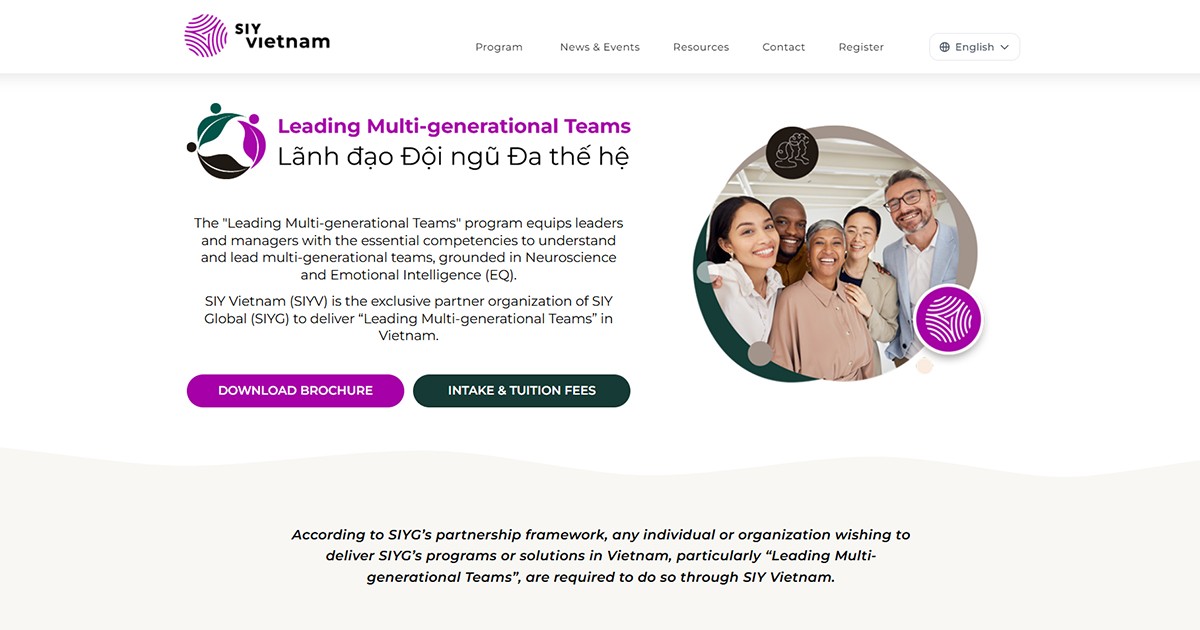
👉 Exclusively for leaders looking to transform this management art into practical, real-world capability, SIY Vietnam is proud to introduce the recently launched program, "Leading Multi-generational Teams": https://siy.vn/en/programs/leading-multi-generational-teams